
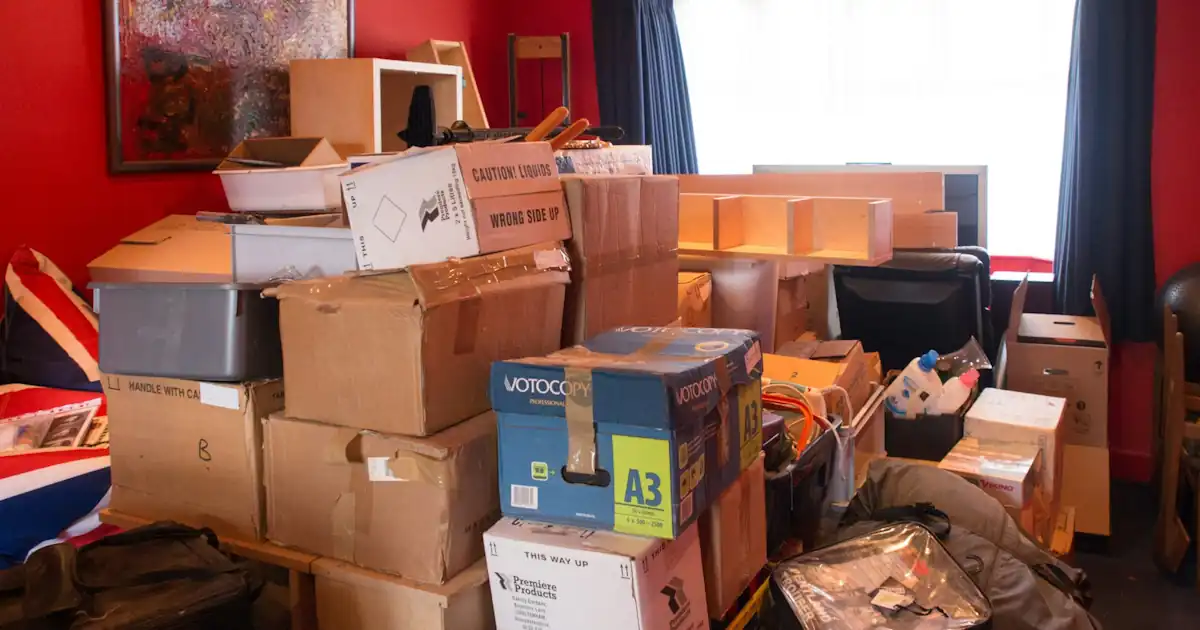
The hardest part of decluttering before moving abroad to France is often not what fits in a shipping container. It is deciding what belongs in the next chapter of your life. Every box can force a small question: “Will I still need this?” Sometimes you are really asking who you will be once you get there.
Quick answer: Start a major purge 4 to 6 months before departure. For most household moves, shipping container pricing is based mainly on shipment volume in cubic meters (CBM). Weight, destination, and service level can also change the quote. Most high-power 120V appliances are better replaced in France than run on large step-down transformers. Only ship the compact, high-value treasures you can’t live without. Use a sell / donate / store / ship / buy-in-France rule, then a valued inventory if you want a French customs duty exemption under transfer of residence rules. See Service-Public transfer of residence (F492).
This guide is the cut before packing. For freight, see how to ship belongings to France and the moving to France hub.
Why decluttering before moving abroad is not KonMari
“Sparks joy” works when the sofa only has to roll down a suburban driveway. Many older French buildings have narrower stairwells, elevators (or none), and doorways than typical US homes. Oversized American furniture can be hard or impossible to move without specialized equipment.
Your belongings have to fit smaller rooms, EU voltage (230V), and shipping costs that rise with every extra cubic meter.
Hardest items to let go (books, hobbies, appliances)
Books, hobby gear, and niche kitchen tools are usually the hardest. “I bake, so the stand mixer must come” is a common trap.
A heavy US appliance on a bulky step-down transformer eats counter space, can generate heat, and fails more often if the transformer is undersized or poor quality. French kitchens usually have less storage and counter space, so smaller appliances make more sense. Leaving our stand mixer was hard, it went to a wonderful friend, they send pictures, it was the right decision. Anything that’s dual-voltage you can bring, or a spare Qwerty keyboard. English-language books can be hard to find in France, or much more expensive once shipping is included.
What US declutter guides get wrong
- Buying everything in France is not always easy. Delivery windows and sizes for beds, mattresses, fitted sheets, and curtains can be slower or pricier than next-day US shopping.
- Weight is not the whole freight story. Ocean freight for household moves is based mainly on volume (cubic meters). A light but huge chair still fills the container and may not fit a French doorway.
- Plug adapters do not fix voltage. They change only the plug shape. High-power 120V appliances (hair dryers, coffee makers, vacuums, many kitchen tools) are usually better replaced in France than used with large step-down transformers.
The cost of keeping too much
Take a suburban US home moving into a second-floor Lyon apartment. You ship a partial container of heavy furniture (a sectional, oak dressers) and leave about a third of the house in US storage “just in case.”
Month 1: stone stairs and a small elevator (many buildings have none) cannot take the pieces. Oversized items stay outside the apartment and need temporary storage, return transport, or disposal. Month 2: emergency disposal plus rush French replacements wipe out the shipping “savings.” Month 12: US storage fees for unused items add up to about 400 for the year.
By then you have paid to pack, ship, dispose, replace, and store the same belongings.
Sell, donate, store, ship, or buy in France
Use this grid after your first purge.
- Sell liquid goods under about three years old with strong local demand (late-model electronics, popular bikes).
- Donate or gift useful items with zero resale value so you skip marketplace haggling. This also allows you to be generous to your friends. Who will in turn, bring you that Trader Joes spice blend when they visit.
- Store only when replacement would cost far more than expected storage fees, or when the item has real sentimental or historical value.
- Ship compact high-value effects, heirloom art, or specialized work gear hard to source in Europe.
- Buy in France major appliances, bedding, and statement furniture that fit EU voltage (230V) and room sizes. Unless a piece has significant financial or sentimental value, replacing bulky furniture after arrival often costs less overall. See renting in France for furnished vs unfurnished leases.
The US storage trap (and the rare exception)
Paying for a US storage unit “until we know if we’re staying” is usually an expensive way to postpone a hard decision. It makes more sense when a company-backed contract returns you within about 12 to 24 months and the employer pays storage.
Sentimental items: keep a piece, not the whole set
Someone inherits an eight-piece mahogany dining set that will not fit a typical French apartment. She keeps two carved chairs, reupholsters them, and ships those. She sells the rest and uses the money for a compact French table. She keeps the memory without keeping the whole set.
When to start decluttering before moving abroad
Begin the first major purge 4 to 6 months out, in the Leaving phase, before you lock a lease or shipping slot. Order: purge and size, then visa and quotes, then packing.
If you start only six weeks out, you often dump unsorted boxes into a container. Panic-shipping often costs more than a patient garage sale season.
Same-month admin after you decide what stays
- Valued inventory: Build a detailed, dated, signed inventory with estimated values (often called an inventaire valorisé). French customs usually expects that list plus ownership and residence proofs. Confirm rules on Service-Public F492 and your mover’s packet. Under the usual transfer-of-residence conditions, relief commonly expects goods owned and used for at least six months. Check the full eligibility list on Service-Public and with your mover.
- Lease type: Suitcase-light points toward a furnished lease (location meublée). Heirlooms you ship point toward an unfurnished lease (location vide). Many expats later move to unfurnished once they settle.
- Binding volume quotes: Lock the list, measure cubic meters (CBM), and get firm ocean quotes before peak season. Details in shipping belongings to France.
FAQ
When should I start decluttering before moving abroad?
About 4 to 6 months before departure (5 to 6 when you can) so you can sell, donate, and size the shipment without panic-shipping.
Should I put everything in US storage until I know?
Usually no, unless a company pays storage and you have a clear return window of about 12 to 24 months.
What should I sell vs ship to France?
Sell liquid, replaceable goods. Ship compact high-value household effects that fit French access. Unless a bulky piece has significant financial or sentimental value, replacing furniture after arrival often costs less overall.
Do I need a valued inventory for French customs?
For many non-EU transfers of main residence seeking a customs duty exemption, yes: a valued inventory is part of the usual file under transfer of residence rules. Check Service-Public F492 and your mover. Relocora does not file customs forms.
Furnished or unfurnished after decluttering?
If you pruned to suitcases, hunt a furnished lease. If you kept favorite pieces, hunt an unfurnished lease. Many expats start furnished, then move to unfurnished once they settle.
Which electronics should I leave behind?
Most high-power 120V appliances are usually better replaced in France than used with large step-down transformers. Prefer dual-voltage electronics and EU models after arrival. Plug adapters change only the plug shape; they do not convert voltage.
How Relocora helps with the purge timeline
Relocora does not book movers or sell storage. Use the checklist for Leaving-phase milestones (Month -5: purge garage; Month -4: estate sale), not every box label. Link appraisals, receipts, and inventory scans in the Document Vault. Ask the AI Coach about French apartment access or French customs documents movers usually request (information only, not legal advice).